Update (June 2026): We have since open-sourced cli-bridge, a small, local, open-source tool that lets Hermes and other bots run on a terminal AI CLI you already pay for. Read the new article, We've Open-Sourced a CLI Bridge for Your Claude Code Subscription, or go straight to the GitHub repository. Please read the disclaimer and risk notice before you use it.
Consumer law varies by country and by state, and your situation has its own facts. If you've been banned and you want actual advice, book a consult or talk to a lawyer in your own jurisdiction.
The technical workaround described below (the bridge) has not been tested in court or endorsed by Anthropic whose rules change and update rapidly and with little warning. Anthropic could still take action against it. If they do so, your account could be permanently banned and you will lose all access to Anthropic services.
If you need these services for production use, the only officially sanctioned way forward is with API based, pay-per-token accounts although we note that use of OpenClaw via API accounts can be prohibitively expensive so please proceed with caution.
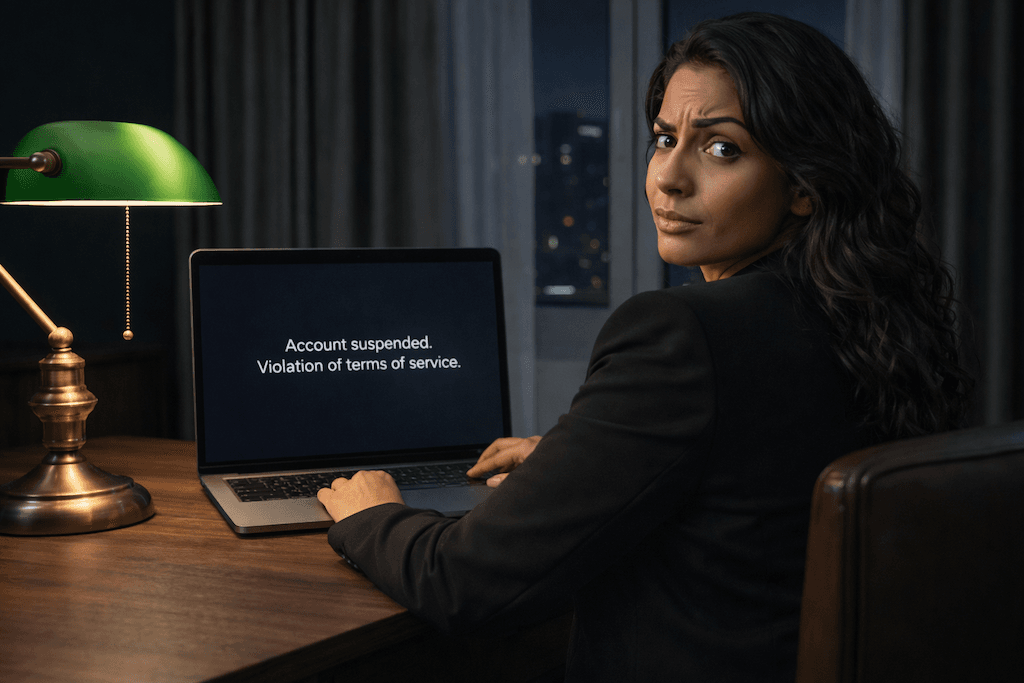
We had been paying Anthropic USD$100 a month to run OpenClaw on the Max plan. At the firm, we used OpenClaw every day. Two weeks ago, our access to Claude via OpenClaw was terminated with no warning, no explanation beyond a generic "violation of our terms," and only a small credit to cover us for a few days of OpenClaw use. And then they kept billing us.
I'm a lawyer. So after the initial annoyance I did what lawyers do. I read the contract.
What I found are provisions in Anthropic's own terms of service that, taken literally, would ban almost every developer who uses Claude Code the way Anthropic itself advertises. And these terms also exposed a deeper set of consumer-protection problems in how the ban was carried out that, in my view, wouldn't survive an Australian court.
In this article I want to cover two things:
- Technical remedy. I'll show you what I built as a workaround: a bridge that connects Claude Code to Mattermost, Slack, Telegram, or Discord using only Anthropic's first-party tools. Not tested in court, but a much harder target for Anthropic than what I was doing before.
- Legal remedy. I'll walk through why the TOS clause Anthropic is relying on could face scrutiny under the Australian Consumer Law, and what steps you can take if it's happened to you.
If you've been banned in Australia, the UK, or the EU, I'm offering a free initial call to triage your case. Book it here.
Part 1: the technical remedy - build a bridge that stays inside the TOS
After the ban I needed to get back to work. I also didn't want to hand Anthropic another easy target. So I built a bridge.
Here's what it does:
- It runs on my own VPS.
- It connects my self-hosted Mattermost (or Slack, Telegram, Discord) to Claude Code CLI.
- Each channel maps to a separate Claude Code session with its own working directory, context, and skills.
- Messages posted in a channel get forwarded to claude -p via the official Claude Code CLI. Responses come back to the channel.
- The bridge is a message transport layer. It does not touch the model. It does not intercept OAuth tokens. It does not reimplement an agent loop. It does not wrap the API. It is a pipe between a chat app and the official CLI and uses Anthropic's native functionality to carry out tasks or interact with other tools.
Why does this matter? The clause Anthropic used to ban OpenClaw users (Section 3, more on it below) prohibits "access through automated or non-human means, whether through a bot, script, or otherwise." Anthropic's own documentation tells you to do exactly that: pipe logs into the CLI, run it in GitHub Actions, run it in CI/CD, use subagents and hooks. The bridge does the same thing the docs tell you to do.
If Anthropic decides to ban bridge users too, they would be going after their own shipped use case. That's a harder argument to win in court than banning a third-party client that reimplements the agent. Harder, not impossible. I am not promising you won't get banned. I'm saying that the ground you'd be standing on is firmer.
Want the bridge? It's the same one I use every day to run this firm. Drop your email and I'll send the spec and setup guide.
Part 2: the legal remedy - why Anthropic's clause doesn't hold up
Section 3 and the "automated or non-human means" clause
Anthropic's Consumer Terms of Service, Section 3 prohibits you from:
"Except when you are accessing our Services via an Anthropic API Key or where we otherwise explicitly permit it, to access the Services through automated or non-human means, whether through a bot, script, or otherwise."
On first read, that seems to cover OpenClaw. The problem is it also covers almost every way Anthropic tells you to use Claude Code. Here are the receipts:
- Anthropic's own Claude Code documentation has a section called "Pipe, script, and automate with the CLI" that shows you how to pipe logs into Claude and run automated tasks in CI. Example code from their docs:
tail -f app.log | claude -p "Slack me if you see any anomalies". That is automated, non-human access through a script. Their own docs. - The same page says: "In CI, you can automate code review and issue triage with GitHub Actions or GitLab CI/CD." That is a bot, running a script, accessing Claude through automated means.
- Anthropic published a blog post titled "Enabling Claude Code to work more autonomously" that advertises subagents, hooks, and background tasks so you can "confidently delegate broad tasks like extensive refactors or feature exploration to Claude Code."
- In "How Anthropic teams use Claude Code", Anthropic describes its own teams automating PR comments through GitHub Actions.
- Boris Cherny, the creator of Claude Code, posted on X that he runs multiple Claudes in parallel with
--dangerously-skip-permissionsand--permission-mode=dontAskso they can operate unattended. - Anthropic ships a full GitHub Actions integration that runs Claude Code on CI runners, responding to events and creating PRs with no human present.
The clause, read literally, prohibits all of that. Anthropic's own marketing promotes all of that. Something has to give.
My reading is that the clause isn't about preventing automation. It's about preventing you from using a different automation tool than theirs. That's not what the words say. And in consumer law, what the words say and what the consumer can reasonably be expected to understand are what matter, not what the drafter meant.
Why we believe this fails under Australian consumer law
Australia has the Australian Consumer Law (ACL), which sits in Schedule 2 to the Competition and Consumer Act 2010 (Cth). It applies to standard-form consumer contracts, which a $100-a-month click-through subscription absolutely is. The ACL has three features that Anthropic's TOS runs straight into.
1. Unfair contract terms. A term in a standard-form consumer contract is unfair where it causes a significant imbalance in the parties' rights, is not reasonably necessary to protect the provider's legitimate interests, and would cause detriment to the consumer if relied on: ACL s 24 (meaning of "unfair"). Unfair terms are void: s 23 (unfair terms of consumer contracts). The "standard form" test is broad: s 27 (matters to be taken into account). A clause that lets Anthropic terminate at will, based on language that contradicts their own marketing, with no warning, no proportionality, and continued billing is, in my view, a textbook unfair term.
2. Consumer guarantees. Services paid for must be supplied with due care and skill: ACL s 60 (guarantee as to due care and skill). They must be reasonably fit for any particular purpose made known to the supplier: s 61 (guarantee as to fitness for a particular purpose). And they must be supplied within a reasonable time: s 62 (guarantee as to reasonable time for supply). A service that is terminated without warning and without refund while you are still being billed breaches these guarantees regardless of what the TOS says. And they cannot be excluded, restricted, or modified by contract: s 64 (guarantees not to be excluded etc. by contract). The clauses in Anthropic's TOS that try to do that are void to the extent they try.
3. Misleading and deceptive conduct. ACL s 18 (misleading or deceptive conduct) is broad. Anthropic spent two years marketing Claude Code as an automation tool. Subagents, hooks, background tasks, GitHub Actions, CI/CD integrations, unattended operation, all of it on their own docs and their own blog. If they then ban paying consumers for doing exactly that, the gap between the marketing and the enforcement is, in my view, misleading and deceptive conduct under s 18. Courts do not like contradictions between what a business sells and what it actually delivers.
UK and EU consumers have comparable protections. In the UK, the Consumer Rights Act 2015, and in particular Part 2 (unfair terms), s 62 (requirement for contract terms and notices to be fair), and s 64 (exclusion from assessment of fairness). In the EU, Directive 93/13/EEC (unfair terms in consumer contracts) and Directive 2019/770 (certain aspects concerning contracts for the supply of digital content and digital services). The analysis differs in the detail but the direction is broadly the same: standard-form consumer contracts that give the provider unilateral termination rights based on vague or contradictory language, applied without warning and capriciously, face a very tough time if challenged.
US consumers have less protection. State consumer-protection statutes vary, and the Federal Trade Commission Act (15 USC § 45) (unfair or deceptive acts or practices) is the main federal lever. Worth challenging, but the foundations for claims is less sure than Australia and other jurisdictions with strong consumer protection laws.
The procedural problems on top of the substantive ones
Even if the clause were enforceable, the way the bans are being carried out has its own issues.
- No warning, no proportionality. Straight to suspension. No yellow card before the red. For a 250/month service, that is not what reasonable consumers expect and not what consumer law in most common-law jurisdictions requires.
- Continued billing after suspension. Multiple users report being charged while locked out. Under the ACL that is a clear breach of the consumer guarantees, and you are entitled to a refund. You should also dispute the charge with your card issuer.
- No specificity in the notice. "Violation of terms of service" is not a reason. Which term? Which service? What conduct? The lack of specificity is itself a consumer-law issue in jurisdictions that require a trader to give reasons before terminating.
- Selective enforcement. The same conduct is tolerated from paying users running GitHub Actions and punished against paying users running OpenClaw. Selective enforcement of a vague term is one of the fastest ways to lose an unfair-terms argument.
What to do if it happens to you
If Anthropic, Google, or OpenAI have suspended your paid subscription, this is the order of operations:
- Email support and ask for the specific clause. For Anthropic: support@anthropic.com. Ask them to identify (a) the clause you allegedly breached, (b) the specific conduct that constituted the breach, and (c) whether they have any evidence. Get the answer in writing. "Violation of terms of service" is not an answer.
- Document everything. Screenshot the error, save logs with timestamps, keep your billing records. Save every email you send and receive. You will need this if you escalate.
- Demand a refund for any period you were charged but locked out. Under Australian consumer law you are entitled to this. If they refuse, dispute the charge with your bank or card issuer. You paid for a service that was not supplied.
- Escalate to your consumer-protection regulator. In Australia, that is the ACCC and your state fair-trading body. In the UK, the CMA and Citizens Advice. In the EU, your national consumer authority and the European Consumer Centre network. Regulators do not act on every complaint but they count complaints, and high-volume issues get attention.
- Consider small claims / consumer tribunal. In Australia the state civil and administrative tribunals (VCAT, NCAT, QCAT etc.) hear consumer claims up to $100,000 with low filing fees and no requirement for a lawyer. The UK has the small claims track.
- Talk about it publicly. The providers respond to PR. The bans happen quietly because they are hoping nobody makes noise. Post on Reddit, X, Hacker News, and everywhere else you can express your concern. The more visible the pattern, the harder it is for the providers to hold the line.
If you are in Australia, the UK, or the EU, and you have been banned, I'm offering a free initial call to look at your facts and tell you whether there is a case worth running. Most of the time the right answer is "send this letter, file this complaint, dispute this charge." If you are running a small business or need the account for business critical services, sometimes it is bigger than that.
The bigger picture
The AI providers have argued that consumer subscriptions were not priced for 24/7 agentic workloads, and the economics break if every $20-a-month Pro subscriber runs a cron job that hits the API all night. Here at Daimon Legal, we simply don't agree with that logic.
Those subscriptions come with numerous rate limits by session, day, week and month as well as usage caps of various types. Anthropic has not alleged any user has circumvented those limits or hacked a way to obtain free inference from Anthropic's powerful models.
The "automated or non-human means" clause in Anthropic's consumer terms, applied to that fact pattern, is the kind of overreach consumer protection law was designed to prevent.
If you are going to ban a paying customer, you need to tell them why. Give them a chance to remedy the issue.
And more importantly, "walk the talk" on your own marketing.
Work with Daimon Legal
- Built a product that might run into TOS/automation issues and want to de-risk it before launch? I review AI-product terms, automation architectures, and data-flow designs for law firms, startups, and in-house teams. Book a scoping call.
- Been banned and you are in AU/UK/EU? Free initial call.
- Want the bridge? Drop your contact details in the Contact Us and I will send you the spec and setup guide.
Paul is the principal of Daimon Legal, a Melbourne-based law firm working with DeFi, AI, and crypto ventures across Australia, the UK, US and the EU. He also builds his own tools.
The information on this page is general in nature and does not constitute legal advice. Please review our Legal Disclaimer for important information about the limitations of this content and the terms governing your use of this website.